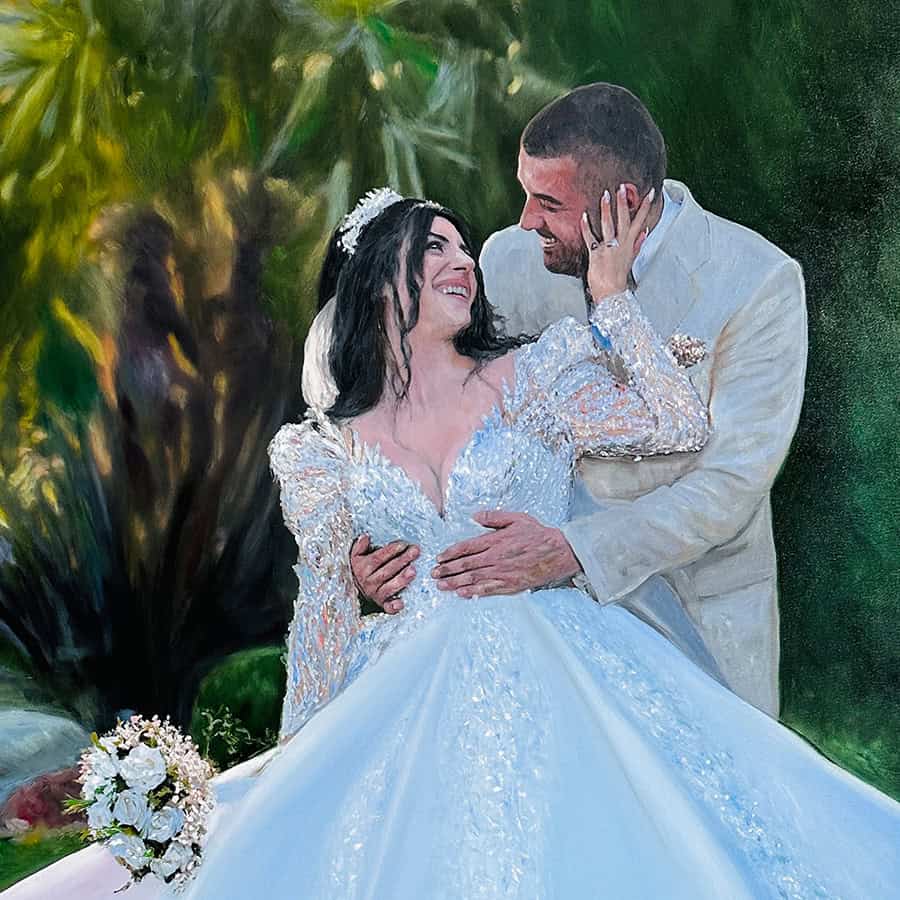
Oil vs. Acrylic for Commissioned Portrait Paintings
When commissioning a portrait painting, one of the most common questions concerns the choice of medium: oil or acrylic.
While both have their place in contemporary painting, my experience over many years has led me to a clear conclusion:
I paint commissioned portraits exclusively in oil.
This decision is not based on tradition alone, but on the specific visual, material, and expressive qualities oil paint offers when depicting a human presence. → See full pricing & commission details.
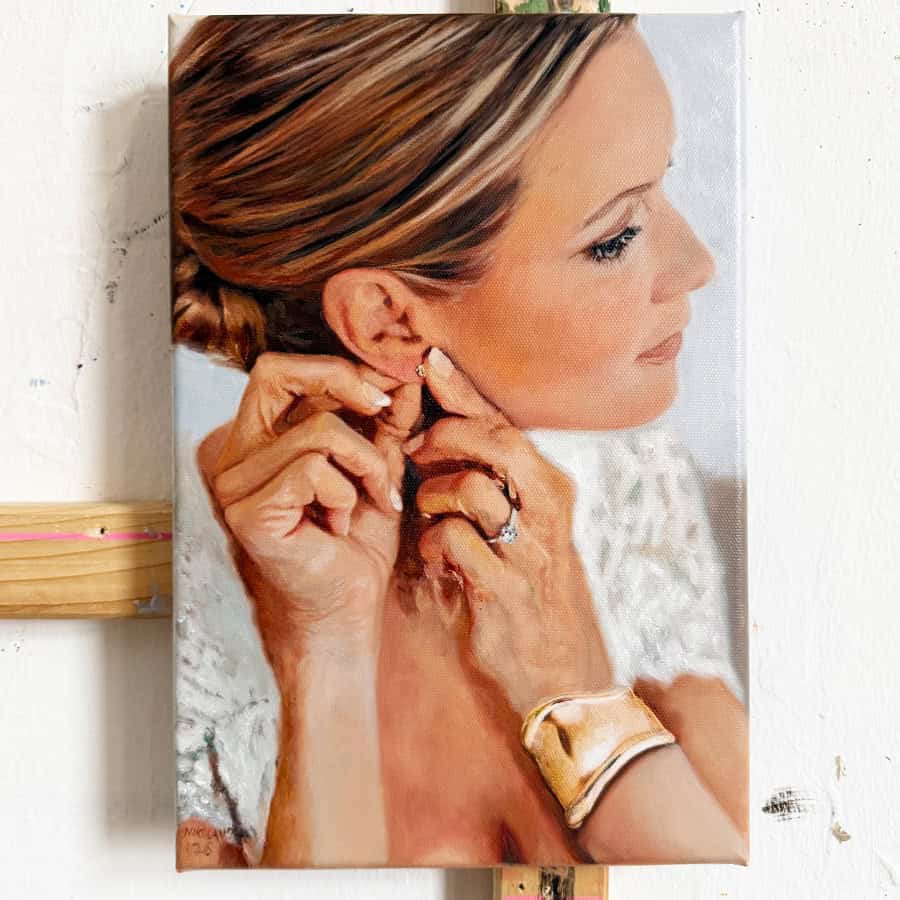
A realistic oil portrait of a woman adjusting her earrings, highlighting the artist’s skill in capturing fine details and textures in portrait art.
Why Oil Paint Is Ideal for Portrait Painting
Oil paint allows for a depth, subtlety, and refinement that is essential in portraiture.
Its most important characteristics are directly related to how portraits are built and perceived:
-
Colors remain open for a long time, allowing continuous blending
-
Transitions between light and shadow can be developed gradually
-
Layers interact optically, creating depth rather than flat color
-
The surface develops a distinct structure and presence over time
In portrait painting, these qualities are crucial. Skin tones, expressions, and atmospheric nuances cannot be rushed. Oil paint supports a slow, attentive process that mirrors the complexity of the subject.
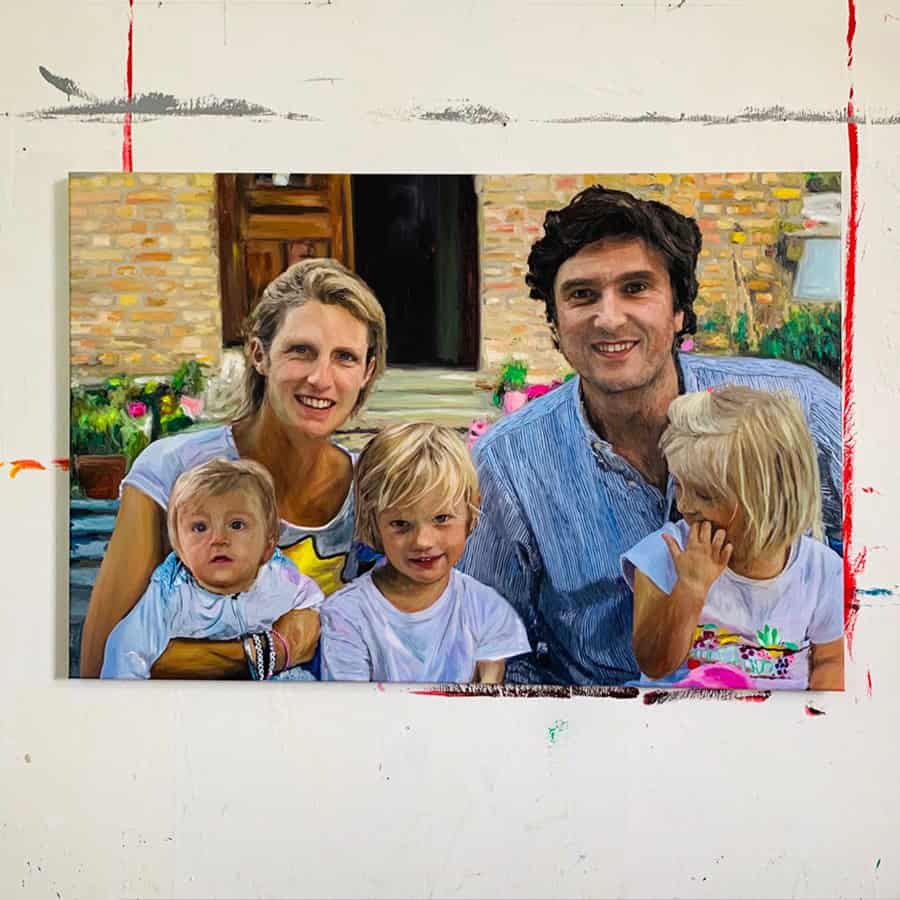
Happy Family – Custom Portrait Painting
Open Working Time and Color Interaction
One of the defining advantages of oil paint is its extended working time.
Unlike acrylics, which dry quickly and lock decisions in place, oil colors remain workable for hours or even days.
This openness allows colors to be mixed not only on the palette, but directly on the canvas. Transitions stay soft, edges can be adjusted, and tonal relationships can evolve organically during the painting process.
The result is a portrait that feels integrated rather than assembled.
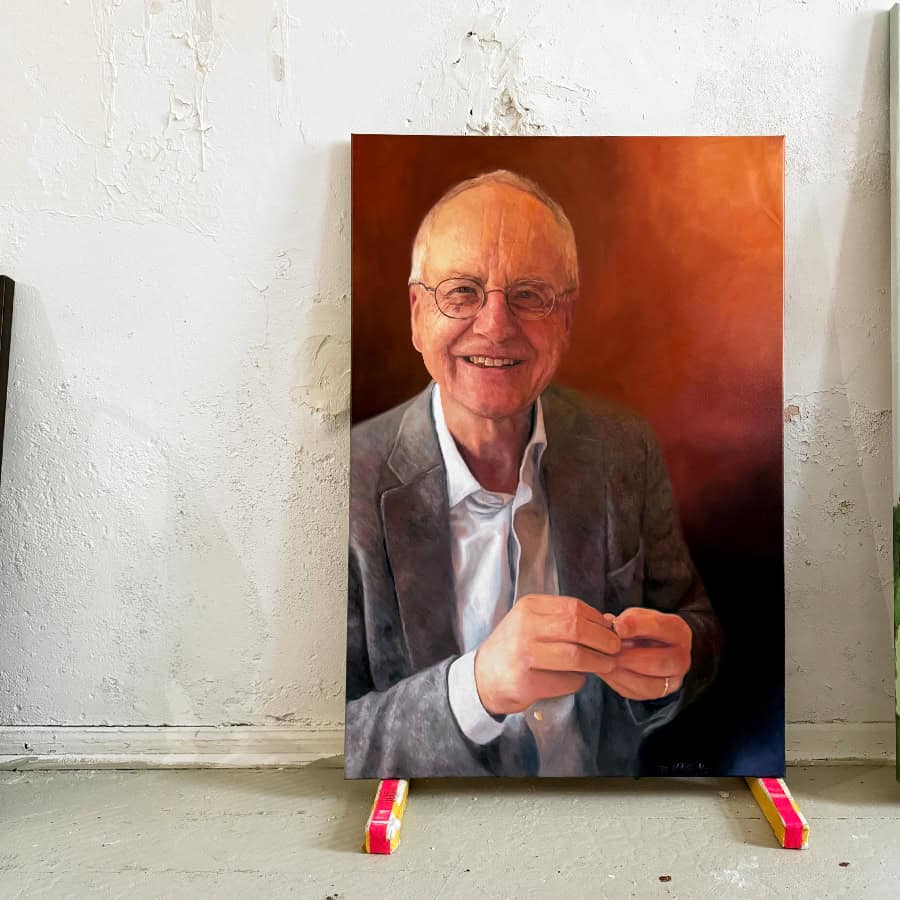
This commissioned artwork demonstrates the differences between oil and acrylic mediums in portrait painting, highlighting texture, color depth, and artistic style.
Layers, Depth, and Structure
Traditional oil painting offers different approaches, most notably direct painting (alla prima) and layered painting.
In oil painting theory, it is often emphasized that direct painting allows an artist to capture a head, a figure, or a moment quickly and with immediacy, while layered painting builds color not side by side, but one layer over another. Through this process, effects are achieved that cannot be reached in any other way.
By working in layers, form and color interact over time. Early underlayers already influence the final color impression, giving oil paintings their characteristic depth and inner coherence.
This layered interaction is one of the main reasons oil paint remains unmatched for classical and contemporary portrait painting alike.
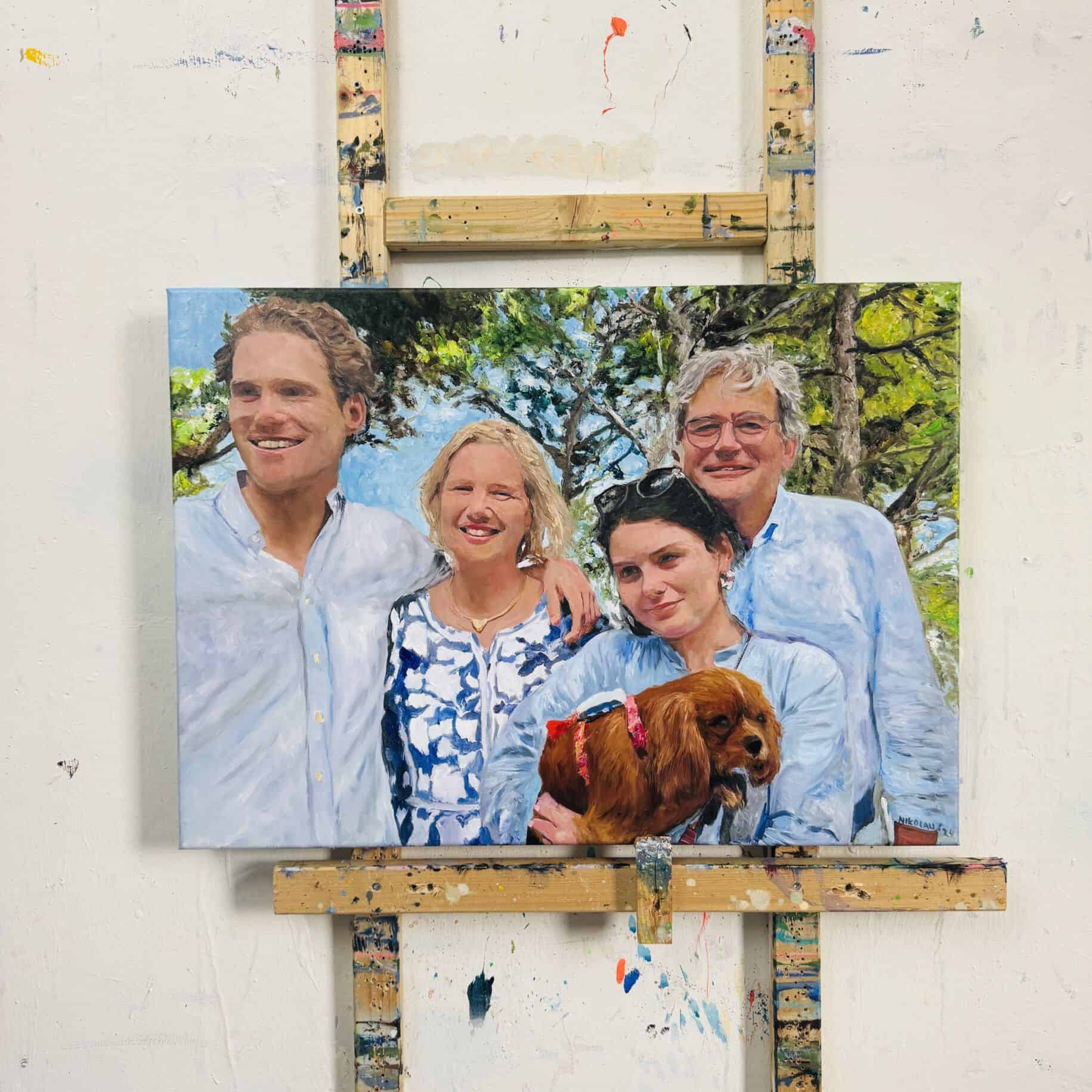
A vibrant family portrait painting by Nikolaus Kriese, depicting four smiling family members and their dog outdoors, showcasing his artistic talent and attention to detail.
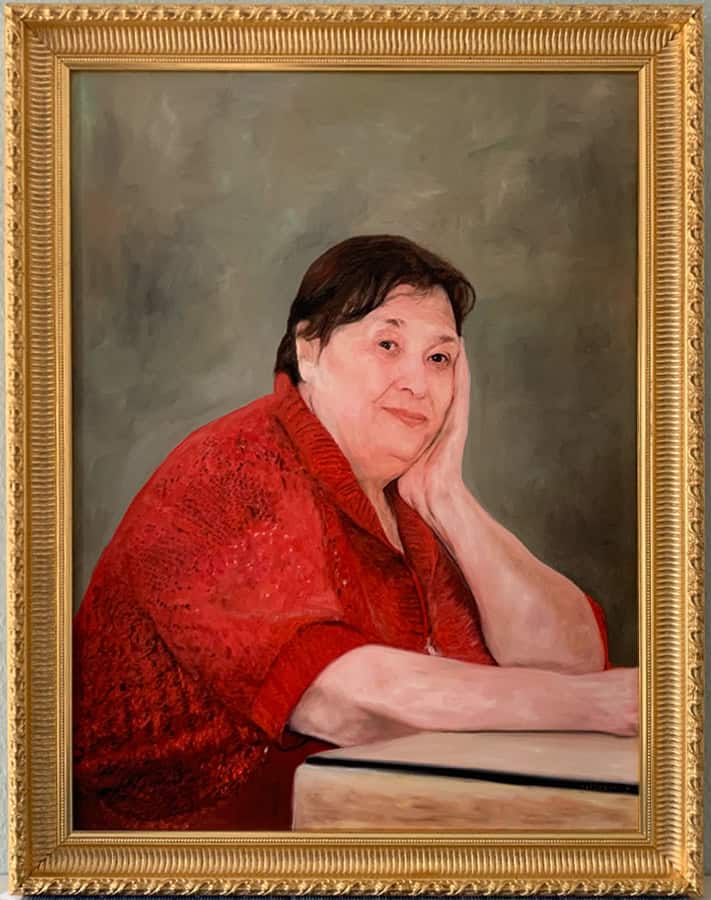
A detailed Custom Portrait Painting of a Woman in Red of an elderly woman wearing a red sweater, resting her head on her hand, captured by artist Nikolaus Kriese, available for worldwide shipping.
Why Acrylic Paint Is Different
Acrylic paint has its own strengths, but they serve a different artistic intention.
Acrylics dry quickly, create flatter color areas, and allow for sharp contrasts and graphic effects. These qualities make them well suited for modern, abstract, or conceptually driven portrait works, where immediacy and surface clarity are desired.
For expressive or abstract interpretations of the human figure, acrylics can be an excellent choice.
For nuanced, timeless portraiture, however, their fast drying time and limited blending window are restrictive.
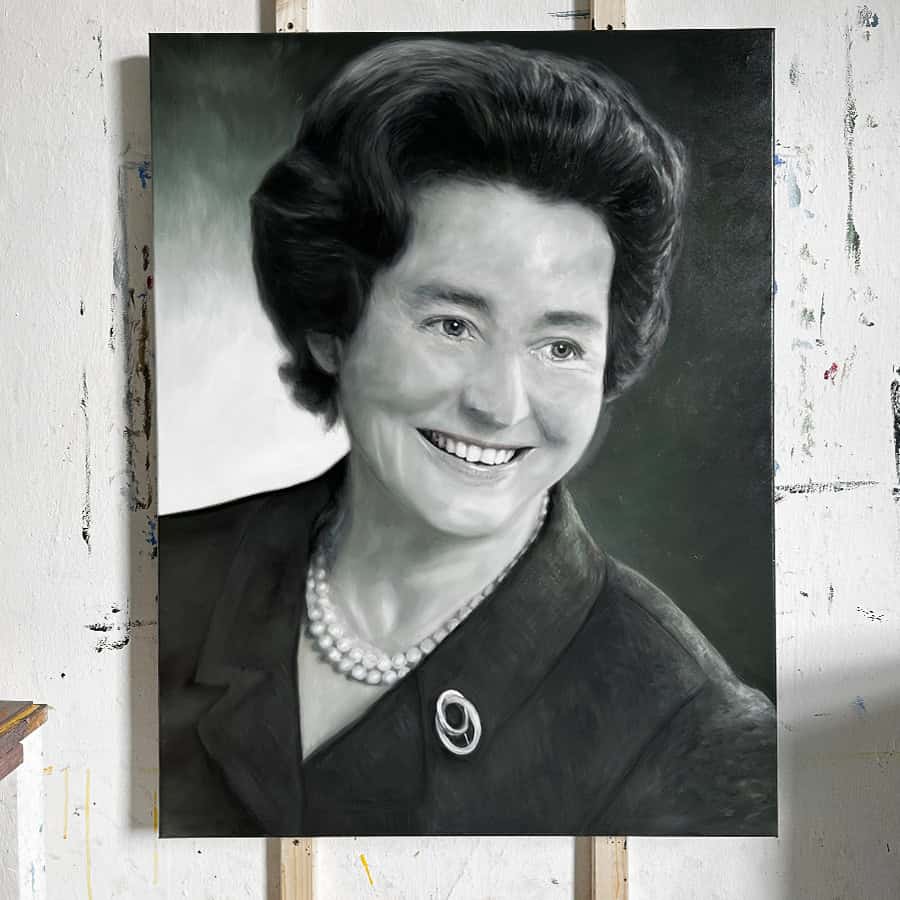
This is a highly detailed grayscale portrait, created by Nikolaus Kriese. The painting highlights her elegant attire, pearl necklace, and a brooch, emphasizing her regal presence. The artwork is displayed on an easel, indicative of a professional studio setting, and is available for worldwide shipping. An excellent addition for royal portrait collectors and art enthusiasts.
Choosing the Right Medium for a Commission
When commissioning a portrait, the medium should support the goal of the artwork.
-
Oil paint is the natural choice for portraits that emphasize depth, realism, atmosphere, and lasting visual richness.
-
Acrylic paint works well for contemporary, abstract, or stylistically reduced portrait concepts.
For this reason, I consistently work in oil when creating commissioned portraits. It allows me to develop each work with patience, precision, and the full range of painterly possibilities the subject deserves.
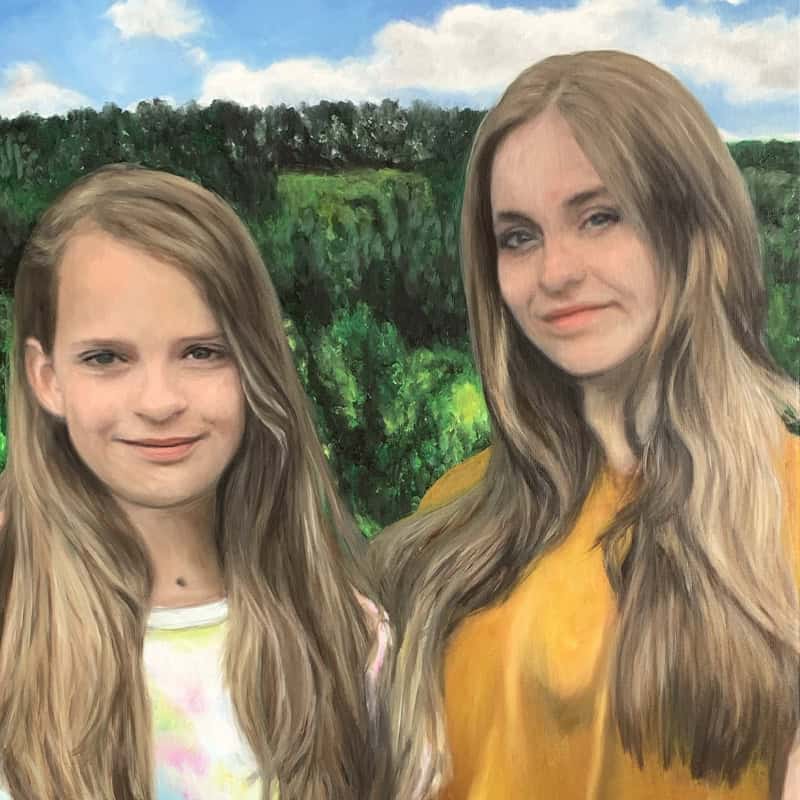
Custom portrait commission by Nikolaus Kriese, available for worldwide shipping. Perfect for personal or gift purposes.

This Custom Portrait Painting by Nikolaus Kriese features a realistic portrait of a man and his dog, painted on canvas. It is available for international shipping, perfect for art collectors and pet lovers.
Final Thoughts
The choice between oil and acrylic is not about superiority in general, but about appropriateness.
In portrait painting, oil paint remains unmatched in its ability to convey presence, subtlety, and enduring visual depth.
This is why, based on experience and artistic intention, oil is always my medium of choice for commissioned portraits.