From Photo to Finished Artwork
A realistic portrait painting is more than a technical reproduction of a photograph. It is a careful interpretation of light, expression, character, and atmosphere — translated into oil or acrylic on canvas.
When clients commission a portrait from me, they are not simply ordering a likeness. They are investing in a hand-painted artwork that preserves personality and presence.
Here is how a commissioned realistic portrait painting is created in my studio.
→ See full pricing & commission details.
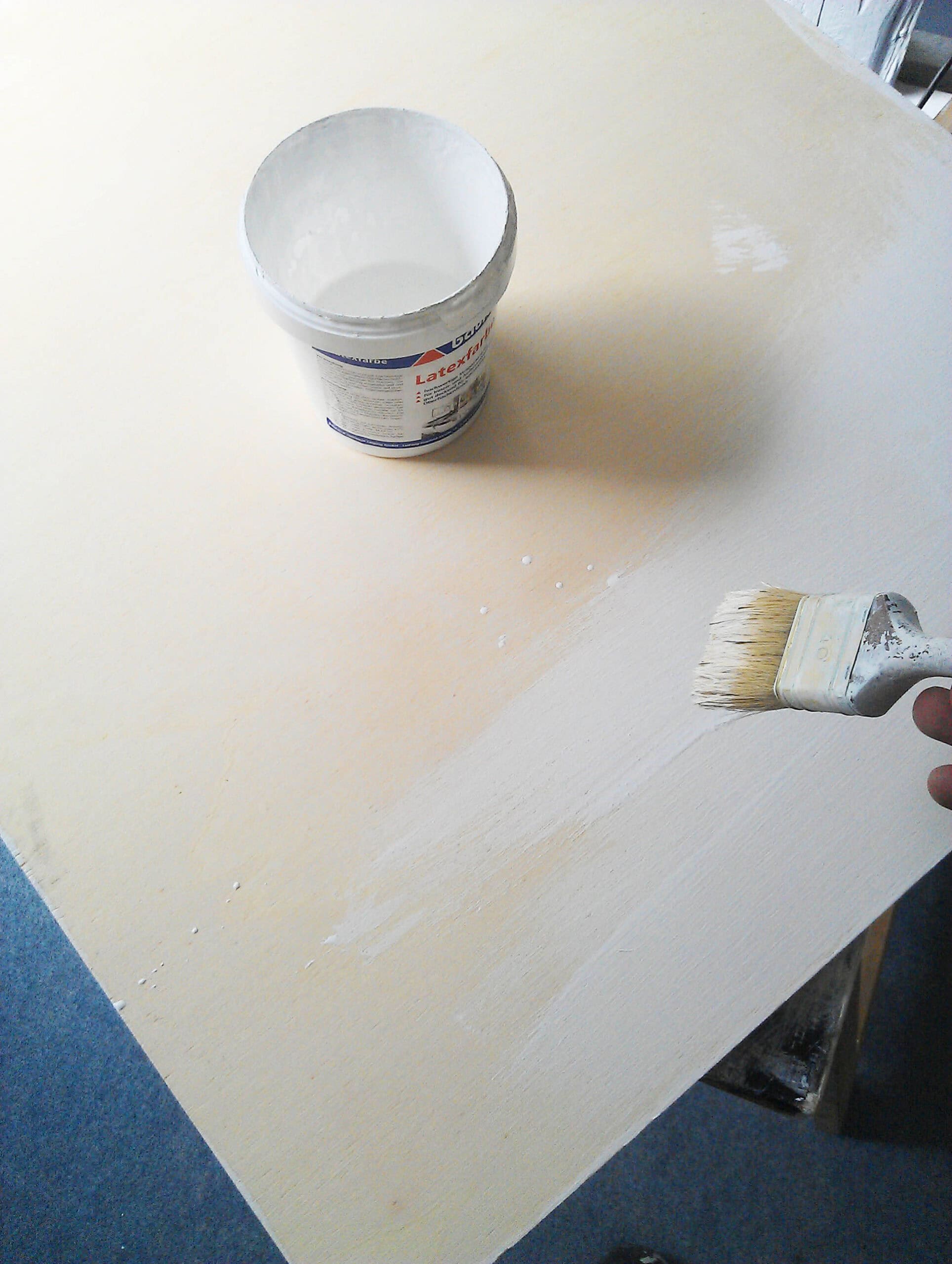
White paint being applied with a brush on a light-colored surface, with a container of white paint nearby.
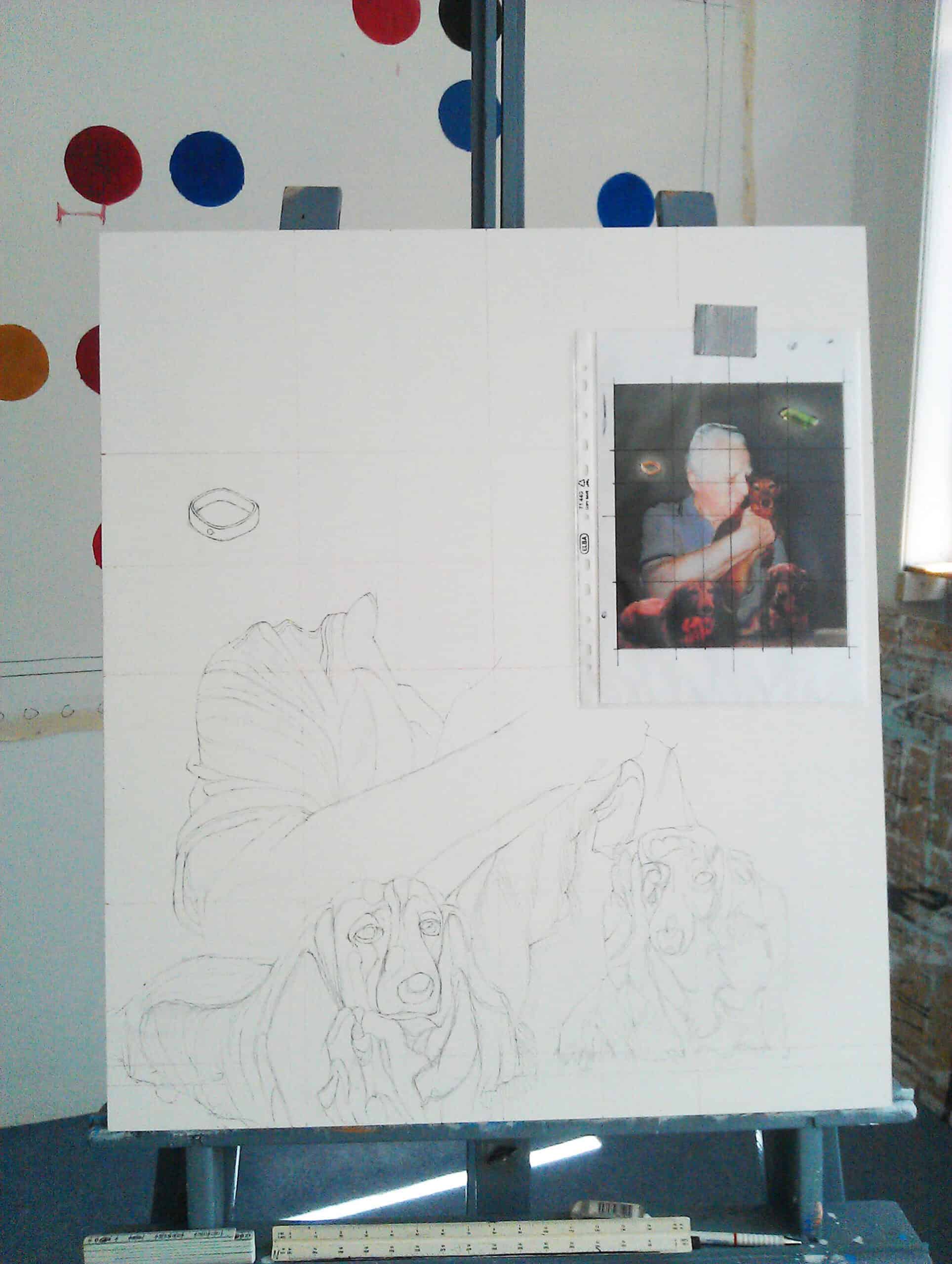
Artwork in progress featuring a sketch of dogs and a reference photo of a person on a white canvas, ready for painting, at Nikolaus Kriese’s studio.
1. Choosing the Right Photo Reference
Every portrait begins with the reference image.
For a realistic portrait painting, the quality of the photo is crucial. Lighting, facial expression, and resolution determine how accurately subtle details can be captured. Ideally, I ask for several photos of the person — this allows me to understand not only facial structure but also posture and expression.
Even when the final painting follows one main photo, additional references help bring depth and authenticity to the work.

A portrait painting in progress on an easel, depicting a person with a dog, with a blurred face, in an artist’s studio setting.
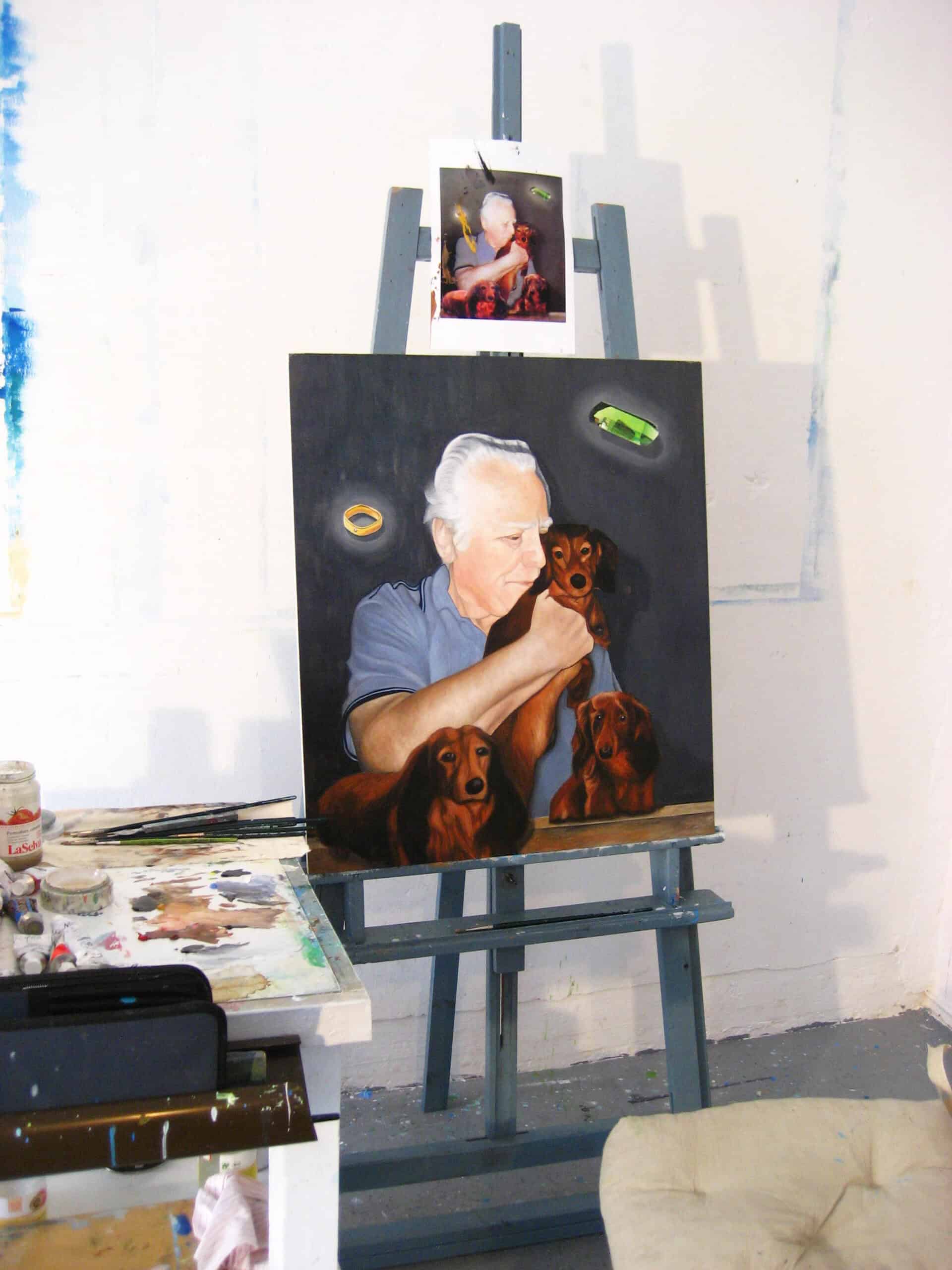
Portrait of a man holding a dog, part of a realistic portrait painting in progress. The artist’s studio setup includes painting supplies and an easel with the artwork.
2. Composition and Artistic Adjustment
A portrait painting is not a direct copy of a photograph.
Before starting the painting process, I carefully evaluate:
-
Cropping and composition
-
Background simplification or enhancement
-
Light balance
-
Color harmony
In some cases, I combine multiple photo elements into one unified composition. The goal is always to create a coherent artwork — not a photographic duplicate, but a painterly interpretation with artistic clarity.
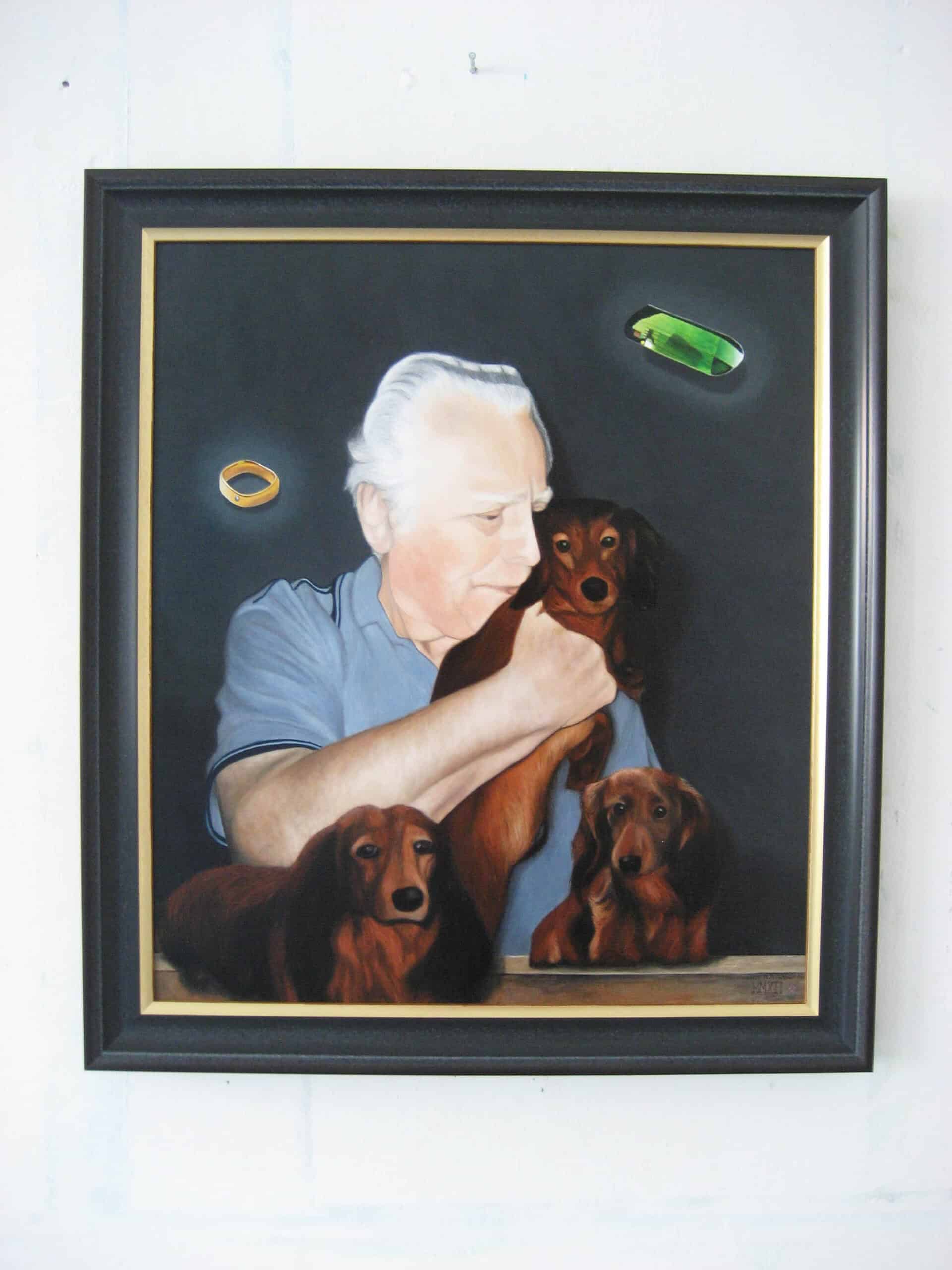
Realistic portrait painting of an elderly man with four dogs, showcasing detailed brushwork and lifelike features, created by Nikolaus Kriese for worldwide shipping.
3. Underpainting and Structure
In oil portrait painting, the process often begins with a structured underpainting.
This stage establishes:
-
Proportions
-
Tonal values
-
Spatial depth
-
Light and shadow
A strong structural foundation ensures that the final portrait maintains stability and realism.
Painting realistic skin tones requires patience and layered application. Fine tonal transitions are built gradually, allowing the portrait to develop dimensionality and subtlety.
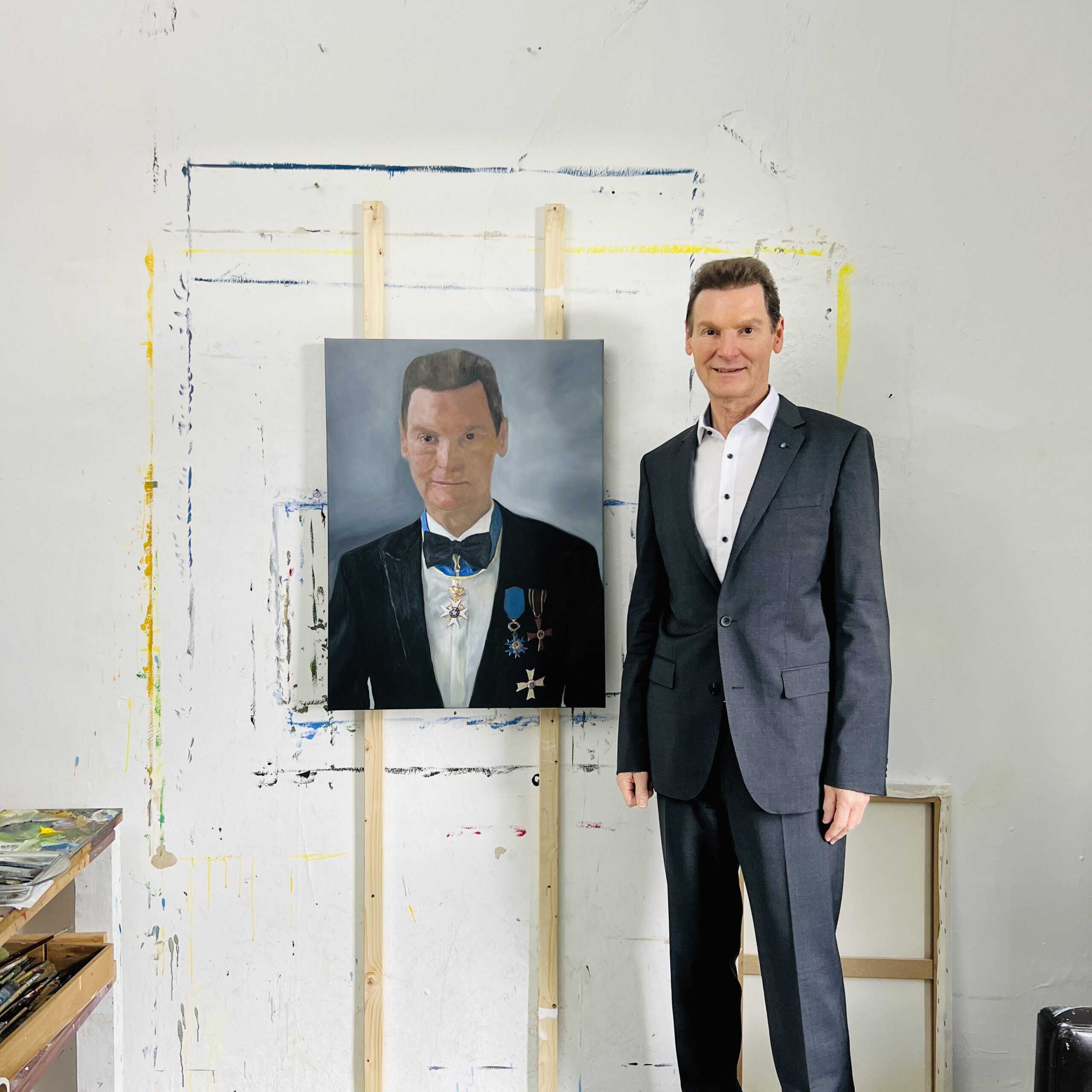
Realistic portrait painting of a man in a tuxedo with medals, created by Nikolaus Kriese, showcasing detailed brushwork and lifelike features, displayed on an easel.
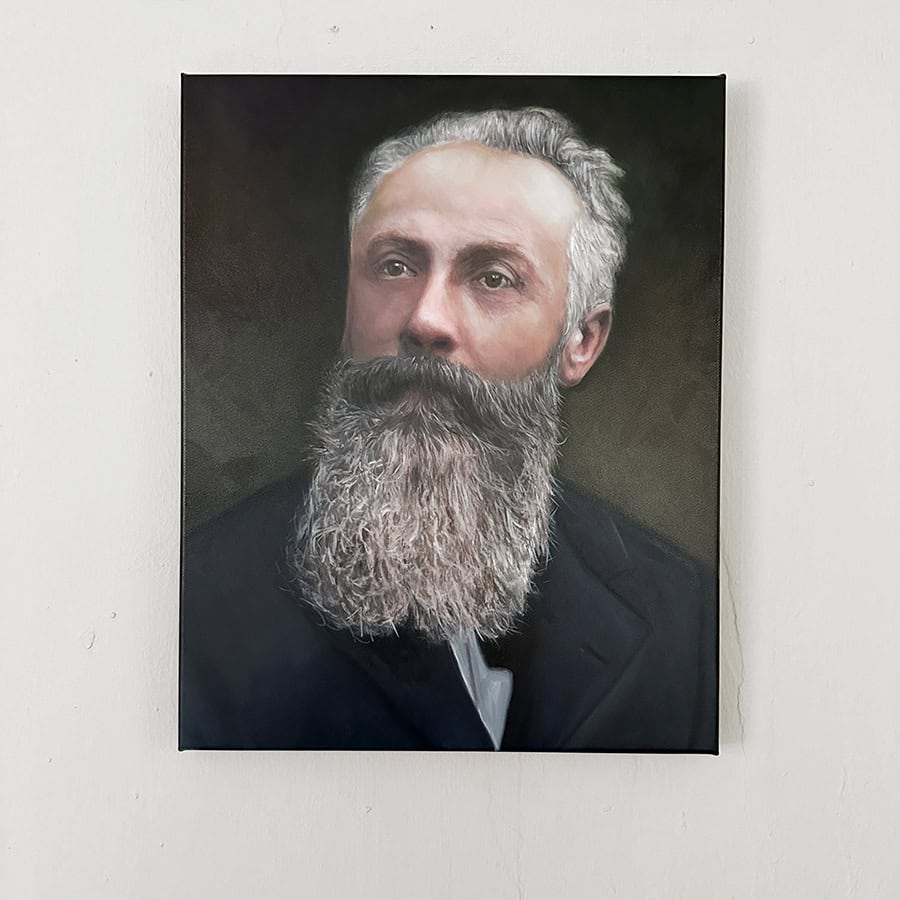
Portrait with a detailed beard, painted by a commissioned artist Nikolaus Kriese , available for worldwide shipping.
4. Capturing Expression and Presence
Technical accuracy alone does not create a compelling portrait.
A realistic portrait painting must capture:
-
The subject’s gaze
-
Micro-expressions
-
The tension between light and shadow
-
The individual character of the person
This stage requires sensitivity and experience. Small adjustments in color temperature, edge softness, or highlights can significantly influence the emotional impact of the painting.
The aim is not only resemblance — but presence.
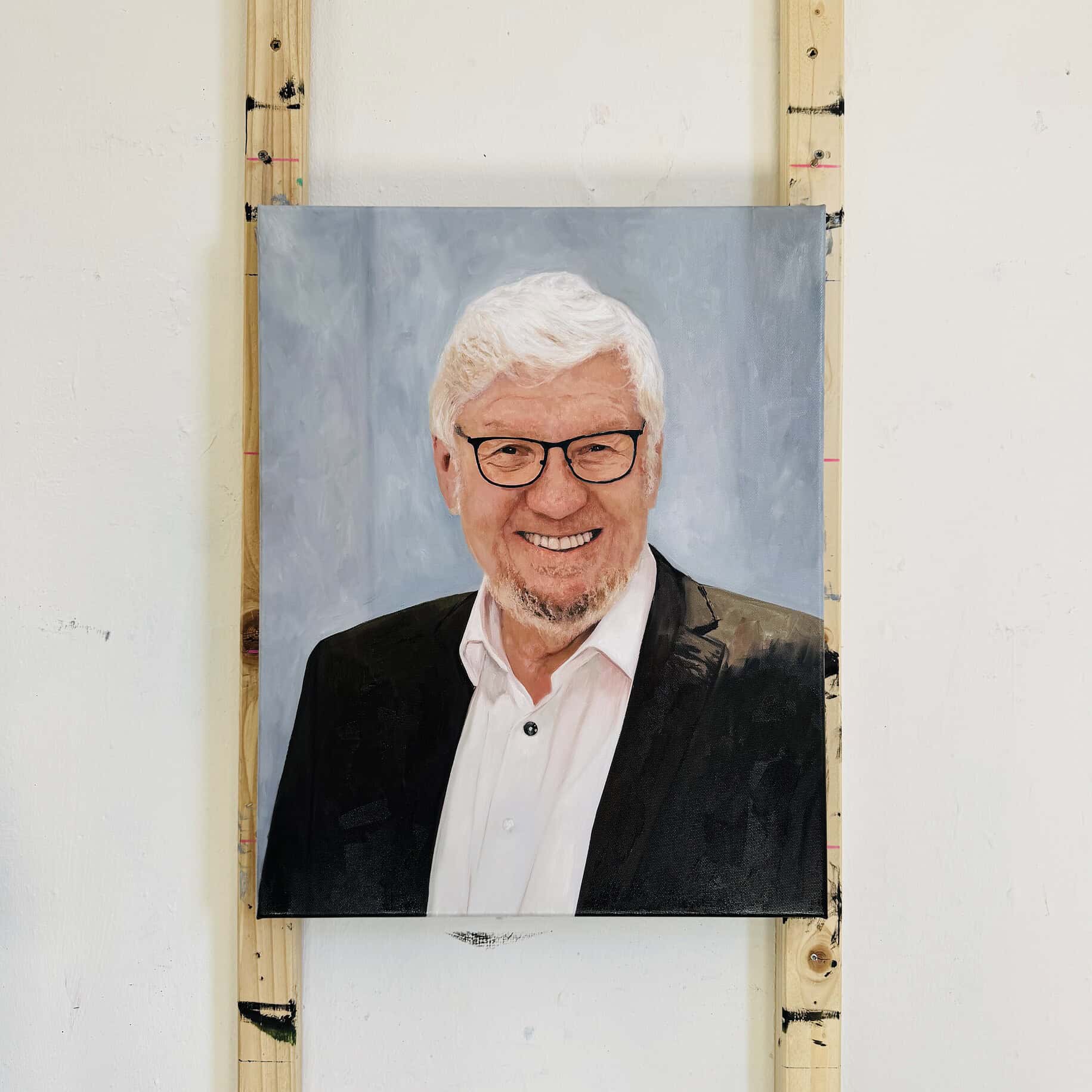
This custom portrait painting by Nikolaus Kriese captures the joyful expression of an elderly man with white hair and glasses, showcasing detailed brushwork and vibrant colors.
5. Refinement and Final Review
Once the painting reaches completion, I photograph the artwork in natural light and send a preview to the client.
Minor adjustments can still be made at this stage. Only when the client is fully satisfied is the painting prepared for delivery.
Oil paintings require appropriate drying time before secure packaging. Each commissioned portrait is stretched on a professional wooden stretcher frame and delivered ready to hang.
Worldwide insured shipping is available.
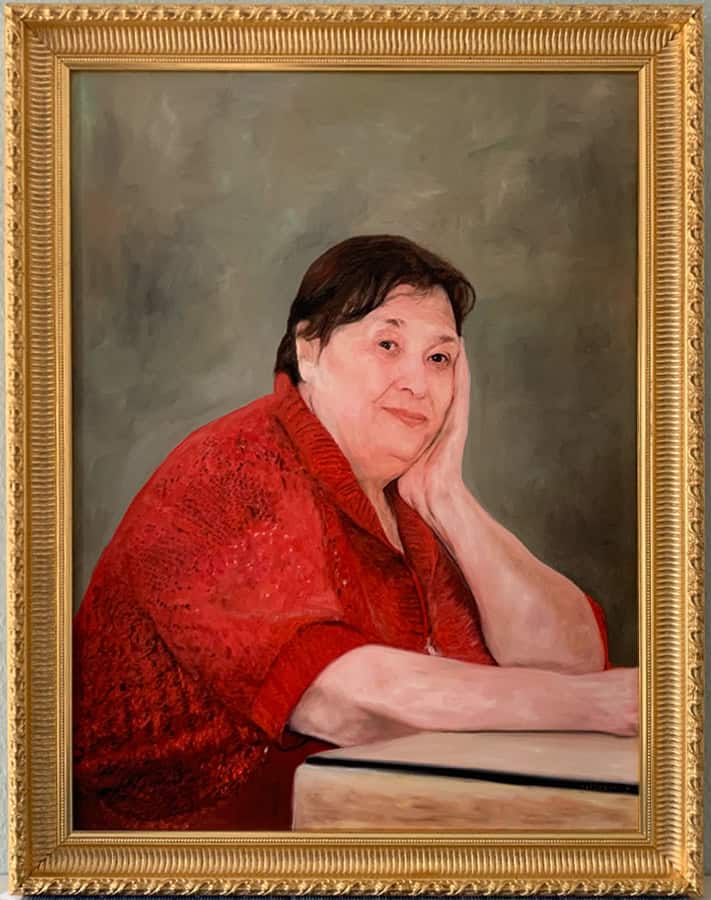
A detailed portrait of an elderly woman wearing a red sweater, resting her head on her hand, captured by artist Nikolaus Kriese, available for worldwide shipping.
Oil or Acrylic – Choosing the Right Technique
Most realistic portrait paintings are created in oil due to its depth, blending capability, and long-term durability.
Oil paints allow for smooth transitions and subtle color variations that enhance realism. Acrylic is also possible when shorter drying times are required.
Both techniques are executed entirely by hand — without digital projection or automated methods. >> See more…
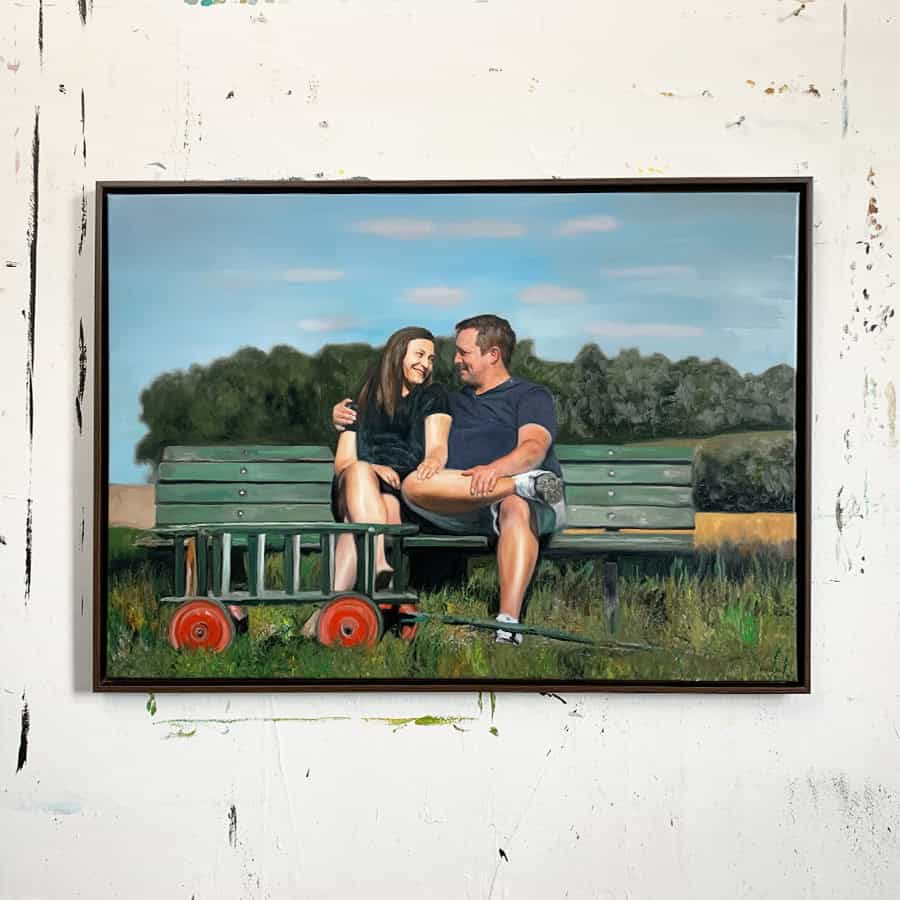
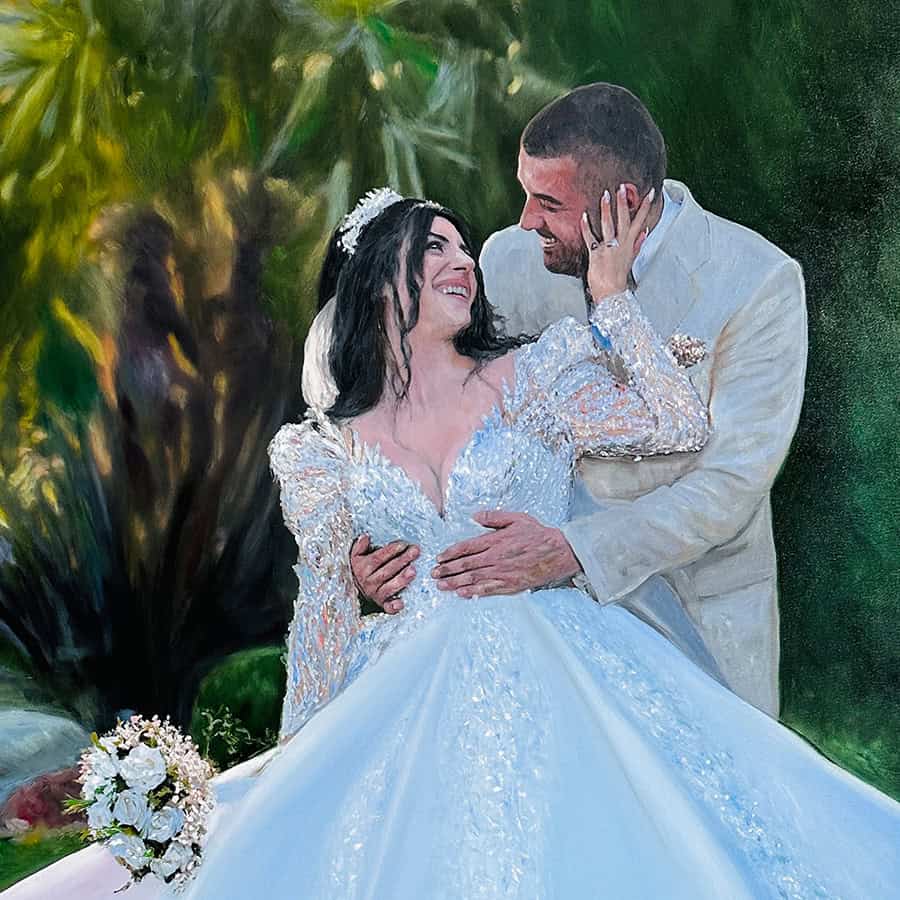
Happy Couple – Custom Portrait Painting
Why Commission a Realistic Portrait Painting?
A hand-painted portrait transforms a fleeting photographic moment into a lasting artwork.
Unlike digital prints, an original oil portrait offers:
-
Texture
-
Material depth
-
Archival durability
-
Unique artistic interpretation
Whether as a personal keepsake, a wedding portrait, or a family heirloom, a commissioned realistic portrait painting carries emotional value far beyond the original photo.
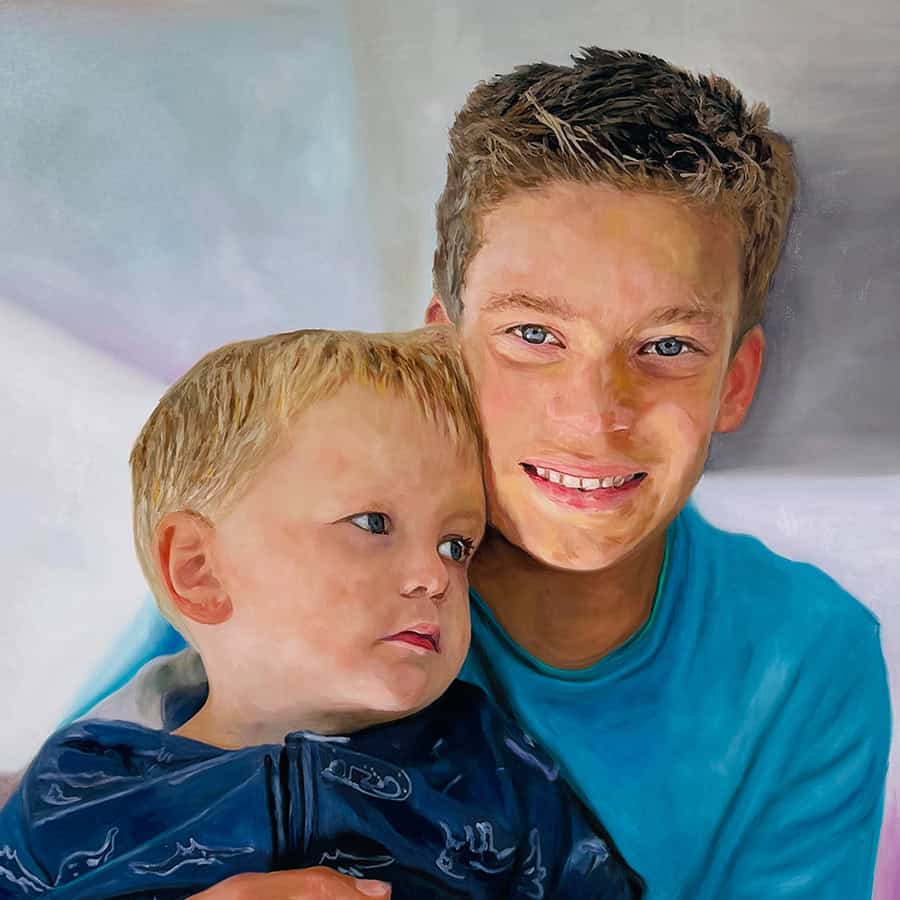
A heartfelt digital portrait of two boys, showcasing the artist Nikolaus Kriese’s skill in capturing emotion and personality through vibrant, detailed artwork, available for international commissions.
Commission Your Realistic Portrait
If you are considering a custom portrait painting from a photo, feel free to contact me with your reference images and preferred size.
Since 1995, I have created numerous commissioned works for private collectors internationally. Each portrait is developed individually with precision, artistic integrity, and attention to detail.