A Professional Guide to Placement, Height & Composition
Art has the power to define a room. A painting can create focus, atmosphere, and depth – but only if it is placed correctly. The way artwork is positioned on a wall influences how it is perceived, how colors interact with the space, and how the room feels as a whole.
This guide explains how to hang paintings properly – from choosing the right wall to determining the ideal height and arrangement.
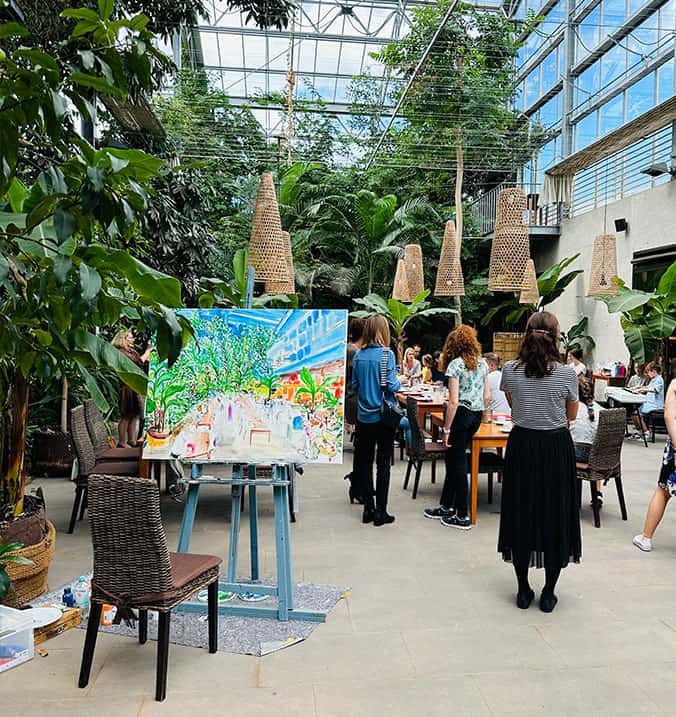
A vibrant art exhibition held in a greenhouse setting, featuring Nikolaus Kriese’s colorful landscape painting on an easel. Visitors are engaging with the artwork amidst lush plants, wicker chairs, and hanging woven lamps, showcasing Kriese’s talent.
1. Choose the Right Artwork for the Space
Before thinking about nails or screws, consider the painting itself.
Ask yourself:
-
Do you want one dominant piece or a group arrangement?
-
Should the artwork create calm or contrast?
-
Does the color palette complement the room?
Large-scale paintings need visual space to breathe. Smaller works can work beautifully in more intimate areas. The goal is harmony — the artwork should not compete with the interior, but interact with it.
Pictures-right-hang
2. Find the Ideal Height
One of the most common mistakes is hanging artwork too high.
A reliable guideline:
The center of the painting should be at eye level — approximately 57–60 inches from the floor to the center of the artwork.
In living spaces:
-
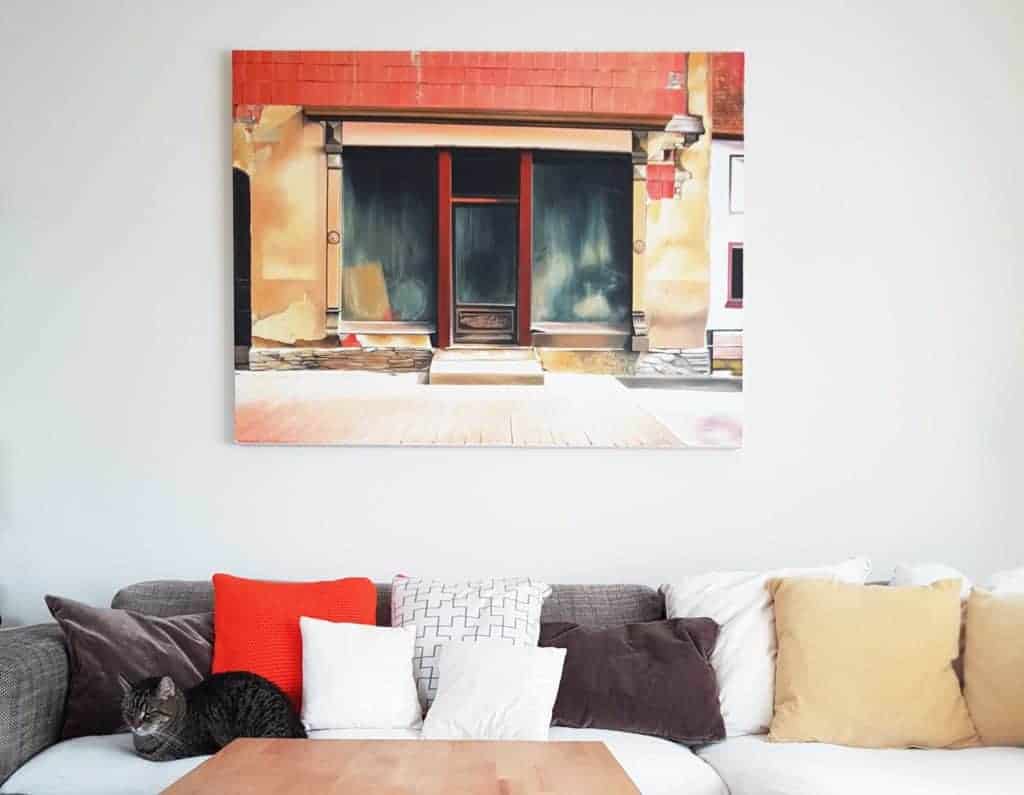
Above a sofa: leave about 6–10 inches between sofa and artwork.
-
Above a bed: center the painting visually with the bed, not the wall.
-
In hallways: slightly higher placement may work due to viewing angle.
The key is visual balance — not mathematical rigidity.
→ See full pricing & commission details.

Bright, colorful forest and river artwork by Nikolaus Kriese enhances contemporary interior design, with worldwide shipping options for commissioned art pieces.
3. Consider Light and Reflection
Lighting dramatically affects how a painting is perceived.
Avoid:
-
Direct sunlight (causes fading over time)
-
Strong glare on glass frames
-
Uneven spotlight reflections
Best practice:
-
Soft, indirect daylight
-
Adjustable gallery spotlights
-
Slightly angled lighting to avoid reflections on canvas or glass
A painting should glow — not glare.

4. Measure Before You Drill
Before making permanent holes:
-
Measure wall width and height
-
Consider furniture placement
-
Use painter’s tape to simulate arrangement
-
Lay paintings on the floor to test composition
Planning prevents visual chaos.
5. Group Arrangements (Gallery Walls)
There are several classic layouts:
Loose Centered Layout
Start with one main piece at eye level. Arrange additional works around it organically.
Geometric Grid
Hang works of similar size with consistent spacing (6–7 cm between frames). Creates order and calm.
Salon / Petersburg Style
A full-wall arrangement from floor to ceiling. Works best in larger rooms with strong character.
Consistency in spacing creates visual rhythm.

Pictures-right-hanging-with-screws
6. Framed or Unframed?
Modern canvas paintings often work beautifully without frames.
Drawings and works on paper benefit from:
-
Passe-partout
-
Glass protection
-
High-quality framing
Framing should support the artwork — not overpower it.

A modern outdoor space featuring a colorful abstract cityscape art piece on a white wall, complemented by a pool, minimalist chair, and a leafless tree under clear blue skies, perfect for worldwide shipping.
7. Secure Mounting
-
Lightweight works: nails are sufficient.
-
Heavy paintings: use wall plugs and screws.
-
Plasterboard walls require proper anchors.
-
Always use a spirit level for accuracy.
Gallery rails are ideal if you like to rearrange frequently.

8. Think in Terms of the Entire Room
Hanging art is not about filling a wall — it is about creating atmosphere.
Large paintings can structure busy rooms.
Smaller works add intimacy in minimal spaces.
Color accents in paintings can echo textiles or furniture tones.
Always step back and evaluate the overall effect.
Final Thought: Artwork Should Feel Intentional
There is no single “correct” way to hang a painting. But thoughtful placement enhances the emotional and visual impact of art.
A painting is not decoration — it is presence.
Looking for a Painting That Fits Your Space Perfectly?
If you are planning your interior and would like a custom painting created specifically for your wall size, light situation, and atmosphere, I offer commissioned artworks tailored to your space.
A well-placed painting transforms a room.
A well-created painting transforms the experience.
Feel free to get in touch for a consultation.